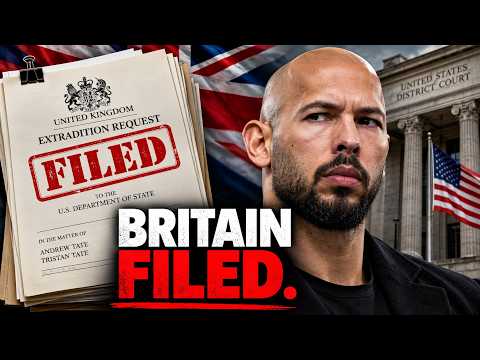
I'm not the kind of guy who says I told you so, but I told you so. Yesterday I argued that if Britain wants them, produce the damn extradition papers, indict him here in the US, or let him go. Well, guess what? Britain has now done exactly that.
Remember yesterday, Judge Lauren Lewis denied release, so Andrew and Tristan Tate would have remained in custody while the UK gets their shit together. AP independently confirms the process could last months.
When breaking news hits that a high-profile figure like Andrew Tate here has been arrested for US extradition, it's easy to picture a private jet idling on the tarmac waiting to whisk them away. But moving someone between two sovereign nations requires a lot of time. It's a rigid, multi-step process.
Think of international extradition like kicking a rowdy patron out of a high-end club. It happens in three phases.
Phase One: The Provisional Arrest
Phase one involves the floor bouncer. When trouble starts, they grab the patron by the collar and hold him securely in place. In legal terms, this is called a provisional arrest. It's a temporary hold. The arresting country is essentially putting the suspect in a legal timeout at the request of the US.
That hold gives the requesting country the time they need to gather their evidence, get their shit together, and deliver a formal extradition request. It only powers up after that paperwork arrives at the court. So when you see a breaking news alert about an extradition arrest, remember that the floor bouncer merely has them by the collar. The actual legal checkout hasn't even started.
Phase Two: Judicial Certification
Once the formal paperwork lands, we move to phase two: enter the federal judge. They act as a door guide at the front of the club checking the list. A major misconception is that the judge decides if the guy's guilty or not. This isn't even a criminal trial. Guilt or innocence is entirely off the table.
You won't find a jury in this room, there's no deep dives into the defendant's character, and you won't hear a dramatic final verdict. Because the judge isn't handing out a punishment, this phase serves as a strict administrative gateway to review the paperwork. At this stage, the judge is focused on one goal: verify the case is legally solid enough to proceed. This is the certification phase.
To grant that certification, the judge verifies that the requesting country passes a rigid two-part checklist:
- Item one ensures the US has a valid, active legal agreement with the specific foreign nation.
- Item two checks the evidence threshold.
Think of this as checking receipts. The judge simply needs to see enough basic proof to confirm the requesting country isn't making the charges up out of thin air. If the receipts look good and the treaty holds up, the judge stamps the paperwork as certified.
Phase Three: The Final Political Approval
Even with the checklist complete and the stamp on the page, the fugitive isn't leaving just yet. This legal approval simply moves the decision from the courthouse to the final, political phase of the process. A court certification usually sounds like the end of the line, but judicial approval is actually not the final step.
The paperwork now travels to the final boss of the extradition process: the Secretary of State. As the club owner, they make the ultimate call. At this level, the strict rules of the courtroom fade away. The decision relies heavily on diplomacy and international politics. The federal court system decides if we can legally hand the person over; the Secretary of State decides if we politically will hand the person over.
Extradition operates as a strict three-part checkout:
- You have the temporary hold.
- The judicial paperwork check.
- The final political approval.
That initial headline about the arrest is only the very first step in a long walk out the door.
Yesterday, my problem was simple: shit or get off the pot. If we're not going to charge him, get them the hell out of jail and send them to the UK. If you're going to keep somebody sitting in a federal jail because another country wants them, eventually that country has to put its cards on the table. Britain just did. Now we get to see the cards.